If I’m honest, pileups during my early days as a DXpeditioner caused me more than a little trepidation. The reason was simple: the world’s most wanted DXpeditions on the most unpredictable HF stage—11 metres—often resemble sudden WX systems forming over the vast Pacific, and the pressure of handling them scared the crap out of me…
One moment the band is calm, like a sheltered Kiritimati lagoon.
The next, phonetics, fragmentary callsigns, broken numbers and clipped signal reports become a tsunami sweeping across the QRG.
 In these moments, hundreds of frenzied DX hunters, scattered across multiple DX markets, converge on a single signal from some remote speck on the map.
To the untrained ear, it’s complete chaos. To the experienced operator, however, it’s organised pressure waiting to be managed.
And at the centre of it all is control.

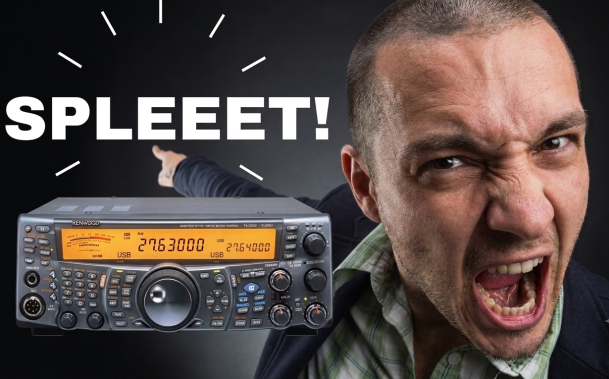
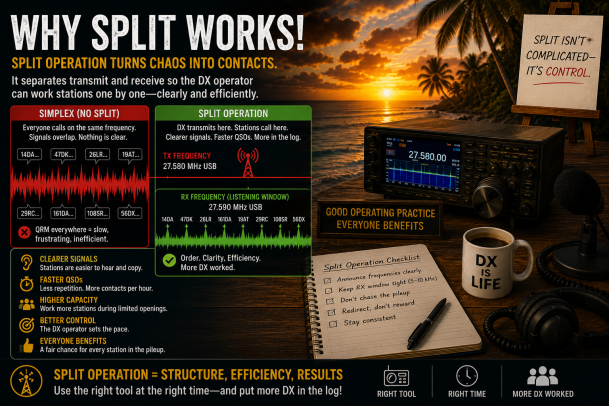
For those new to the hobby, split operation simply means transmitting on one frequency while listening on another…
For example:
TX: 27.580 MHz USB
RX: 27.590 MHz USB
A small offset—but enough to separate order from chaos.
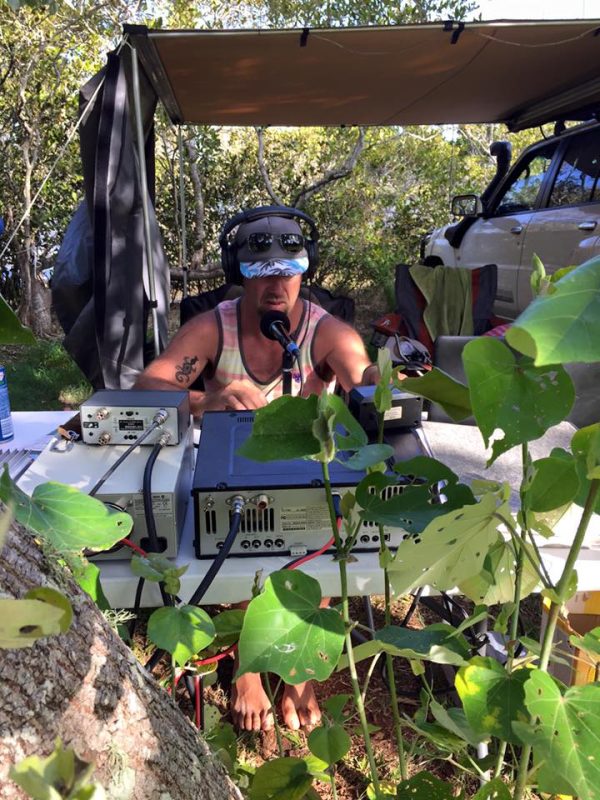
During the peak of Solar Cycle 25, many of the DA-RC’s rare Pacific activations, including my own, generated some of the largest pileups I’ve experienced in more than three decades on 11…
Being in the right location, at the right time, with reliable equipment certainly helped, but one factor consistently separated the most productive activations from the rest: effective pileup management through split mode operation.
On DXpeditions, within moments, a manageable trickle of callers can become a solid wall of RF. Signals overlap, reports disappear beneath stronger callers and the QSO rate begins to slow.
This is where “going split” becomes essential.
It opens channels through the pileup, allowing contacts to flow steadily into the log.
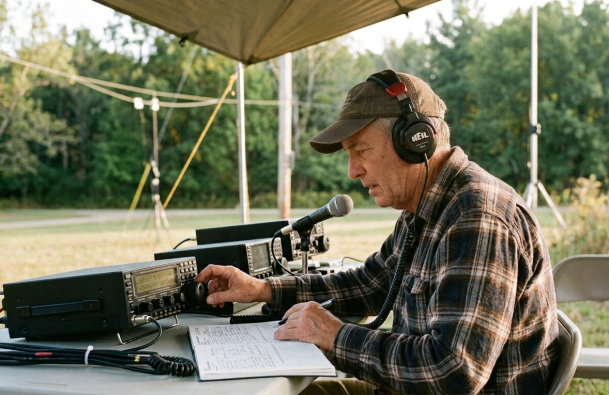
Repeatedly, this has occurred in my own activations and my most recent one, 341DA0 from Timor-Leste, stands out…
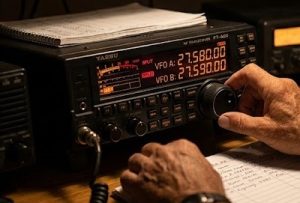 During this 2026 activity, EU short-path callers collided with strong Asia-Pacific activity around greyline which necessitated a change from simplex.
Likewise for 210DA0 Wallis and Futuna a few years back where rapid propagation shifts in the late evenings produced simultaneous pileups from EU, NA and SA that proved super challenging.
In both cases, split operation was the difference between maintaining control and sending my head into a spin!
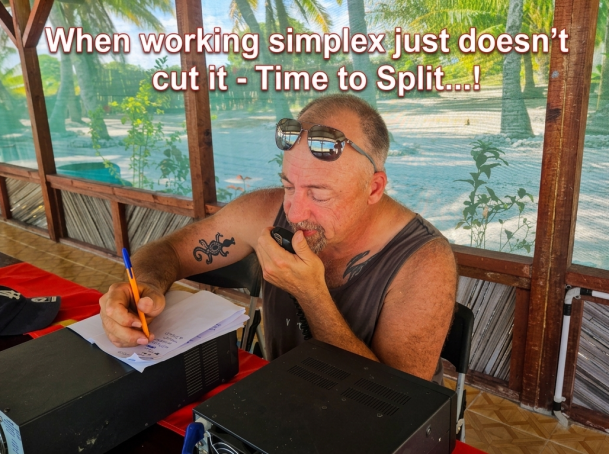
The Decision to Go Split
While some guys might argue otherwise, for me, there’s no fixed trigger point to start split operation—only judgement shaped by time on the front line of “Most Wanted” DX work…
Switch too early and you complicate what’s still a manageable situation. Trust me, I’ve done it and kicked myself afterwards.
Switch too late and you’ve already allowed the pileup to gather a momentum that’s difficult to reverse.
Like most aspects of successful DXing, timing is everything!
Why Split Works
In my opinion, going split doesn’t remove chaos, it simply organizes it…
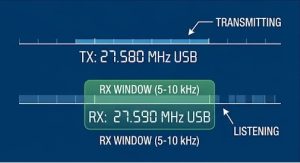 Instead of a single mass of overlapping callers, the DX Adventurist in split mode can work across a defined RX window, selecting stations one by one by one by one. The effect is immediate. Signals become individually readable, DXchanges become faster and cleaner, and the pileup develops rhythm instead of randomness.
In the early days of 276DA0 Tuvalu, strong LP openings with EU at sunrise mashed with regional callers from neighbouring OC DXCCs created a tightly compressed pileup that quickly became unworkable in simplex. Split ops relieved that pressure and restored operational structure that for moments had me disheveled and screaming for mercy.
A similar situation occurred during 266DA0 Kiritimati Atoll around sun up…
Here, simultaneous EU over-the-pole propagation, with SA and NA openings, created three competing streams of callers converging on the same QRG.
Split allowed those streams to be separated into a workable RX window instead of collapsing into one indistinct wall of indistinguishable audio.
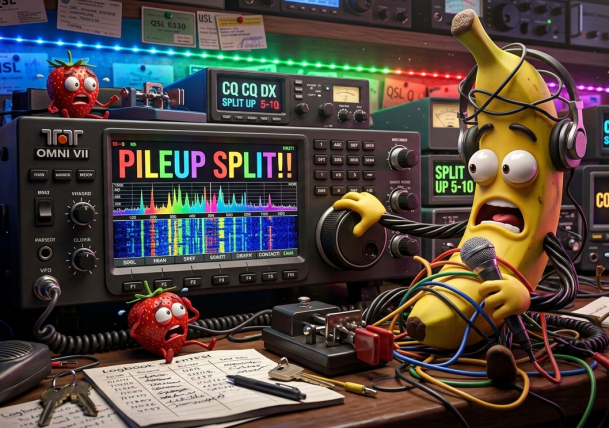
During 70DA0 American Samoa, earlier this year, propagation told a different story…
 Rather than one sustained multi-continent pileup, the operation became plagued by persistent blind callers repeatedly transmitting over the simplex frequency without ever hearing the station. Those unnecessary transmissions clogged the QRG, delayed genuine QSOs and reduced overall efficiency.
They also frustrated the hell out of me!
Without moving into split ops, the frequency would’ve become little more than a block of unresolved QRM and my head, too, would have exploded.
With it, though, the “Most Wanted” Tutuila Island activation remained orderly and productive, while the army of blind callers suddenly found themselves without the ability to disrupt the operation with their rude carry-on.

When to Make the Move
Essentially, every pileup behaves differently, but for me the warning signs are remarkably consistent…
I’m reaching for the split mode switch when signal reports begin disappearing beneath QRM from tail-enders or overlapping callers, when exchanges require repeated attempts to complete, when stations continue calling without hearing my return audio, or when multiple paths converge into one tsunami of signals.
When one or more of these conditions appears, simplex is no longer the most efficient way of working the pileup.
So it’s time to split!
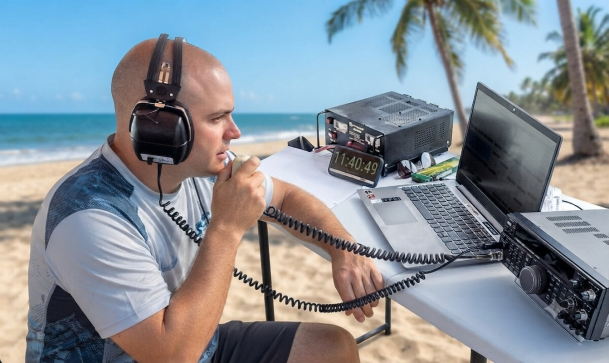
When Split Is NOT Appropriate
Despite its advantages, split operation isn’t always the right answer when a pile-up begins to build…
For starters, not every guy is using equipment capable of split operation. Across the Freeband community, in particular, many stations continue to use modified CB radios or older amateur rigs that simply don’t offer split capability.
If your objective is to make your DXpedition accessible to as many operators as possible, forcing everyone to work split may unintentionally exclude a significant portion of your audience.
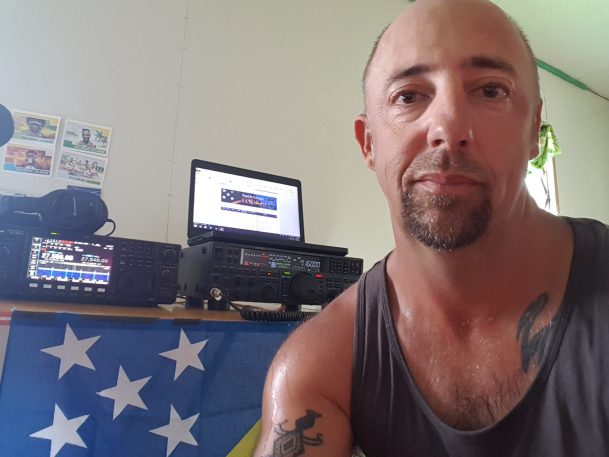
My own experience working some enormous NA pile-ups on 10m rarely required split ops either…
The reason wasn’t a lack of callers—it was their DXceptional operating discipline. Operators listened carefully, called at the right time and generally respected my instructions. As a result, impressive QSO rates were achieved while remaining on a single frequency.
For that reason, flexibility is one of the most valuable tools a DXpedition operator can possess.
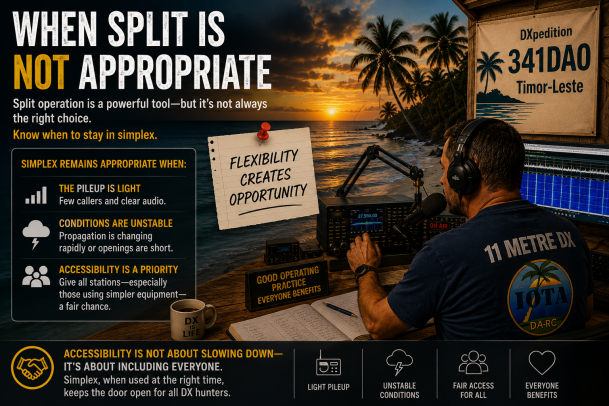
When the pile-up is manageable, propagation is unstable, or accessibility is more important than squeezing out the absolute max QSO rate, simplex remains an excellent operating choice.
The closing stages of 341DA0 Timor-Leste demonstrated this perfectly…
By then, most of the Big Guns had already been worked and propagation had begun to settle.
Remaining in simplex mode gave Small Pistols as well as those guys using modified CBs a much fairer opportunity to make the log.
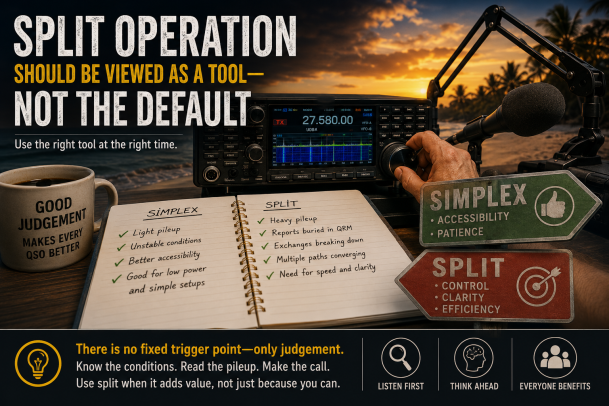
Operating Split Effectively
Undoubtedly, split only works when it’s clearly communicated on the air and consistently applied throughout the activation…
Over recent DXpeditions I’ve made a conscious effort to refine this aspect of my operating thanks to the advice of those in the DA-RC whose opinions I value.
 Over time, I’ve found it essential to announce the listening frequency clearly and repeat those instructions every few minutes as fresh callers continue arriving on the scene. New stations are constantly joining the pileup and many guys simply won’t have heard previous announcements.
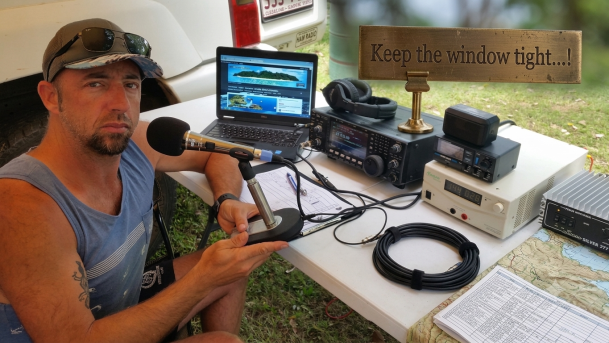
Keeping the RX window tight—typically around 5 to 10 kHz on 11 metres—helps maintain order and discourages unnecessary spreading of the pileup….
On a couple of occasions this solar cycle (during 135DA0 from Malaita Island and 96DA0 from Tongatapu Island), I did reach as far as 20 kHz up, such was the thickness and sheer volume of stations in the pileups
But limiting the spread to no more than 10 kHz is definitely the way to go, if you can manage it.
In my opinion, constantly tuning around the RX window should also be avoided….
Doing so often encourages stations to chase the DXpedition station from frequency to frequency, much like pelagics chasing baitfish from bombie to bombie, instead of remaining spread naturally across the listening window.
I often employ the 10-QSO rule which basically means that on the conclusion of the 10th QSO, I change the RX window.
My final piece of advice is simple: redirect stations calling on the TX frequency—don’t reward them by completing the contact…
A polite reminder of your listening frequency keeps the operation moving while encouraging better operating practice. If you stop and work stations calling on your transmit frequency, you’re effectively rewarding either ignorance or poor operating technique. It doesn’t take long for others to notice, and before you know it, more callers are abandoning the listening window in the hope of getting the same treatment.
Stay consistent and the pileup will usually correct itself. More often than not, there will also be a few good-natured “Split Police” in the pileup who are only too happy to remind offenders where you’re actually listening!
The Caller’s Role
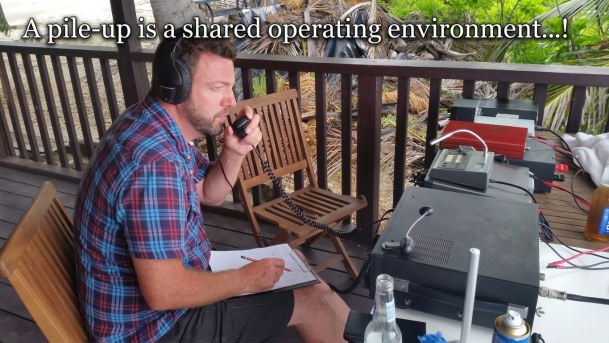
A pileup is a shared operating environment, so the responsibility, in my opinion, doesn’t rest solely with the DXpedition operator…
Instead, every DX hunter has a role to play in helping the activation succeed.
Good operating practice doesn’t just improve your own chances of making the log—it improves everyone else’s as well.
The first and most important rule is simple: listen…
Before transmitting, make sure you’ve identified the DX station’s listening frequency or receive window.
Far too many operators are so eager to be heard that they forget the most valuable tool in their station is their receiver.
Patience is equally important…
Never TX over an active QSO or throw your callsign out before the previous contact has been completed.
Doing so achieves nothing except masking the station currently being worked, slowing the QSO rate and frustrating both the DX operator and every other hunter waiting their turn.

One of the greatest misconceptions in DXing is that calling louder or more often improves your chances…
It doesn’t. All it does is annoy those around you.
In reality, timing beats power almost every time.
One well-timed call on the correct listening frequency is worth far more than twenty blind calls on the DX station’s TX frequency. This strategy also earns you a ton load of respect.
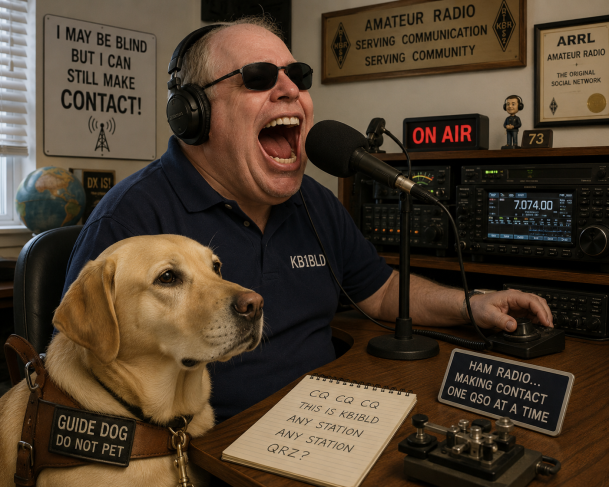
Remember this too—a disciplined pileup develops its own rhythm…
The best operators have their ears to the QRG. They wait for the right opportunity, make their call, and then listen again.
That rhythm allows the DXpedition operator to move efficiently across the RX window, maintaining a steady flow of contacts and maximizing the number of stations ITL.
Without discipline, a pileup quickly degenerates into interference. Callsigns are repeated unnecessarily, stations TX over one another, and valuable opportunities are wasted.
With discipline, however, hundreds of stations can work a rare DXpedition in a remarkably short period of time.
Everybody benefits!
Final Thoughts
Split operation is neither complicated nor mysterious…
It’s simply another tool in the DX operator’s arsenal—but one capable of dramatically improving the efficiency of an activation when used at the right time.
Like any tool, success isn’t determined by having it available; it’s determined by knowing when to use it. Go split too early and you may complicate what was still a manageable pileup. Wait too long and you’ll find yourself trying to regain control of a frequency that’s already descended into disorder.
📌 Across activations including 341DA0 Timor-Leste, 210DA0 Wallis & Futuna, 276DA0 Tuvalu, 266DA0 Kiritimati Atoll, 70DA0 American Samoa and several others, one lesson has remained constant…
 Every pileup has its own personality. Every propagation opening behaves differently. Good judgement doesn’t come from reading about DXing—it comes from sitting behind the mic, learning to read the pileup in front of you and adapting to the conditions as they unfold.
Ultimately, split operation, for a DXpeditioner, is about giving yourself the best opportunity to work as many stations as possible while giving every DX hunter a fair opportunity to make the log.
At the end of the day, the goal isn’t to create the biggest pileup…
It’s to work the biggest pileup.
Thanks for reading!
73 de Darren, 43DA001

Thanks Daz for the great story and to give an insight to your expedition experiences.
Never had a hug pileup like you had but i can tell you to stay inside of a pileup can be also very hard. But as you written, listen, listen and calling on the right time is the key.
73 Frank
A nice insight to your expedition experiences, I must admit I haven’t had the full on pile ups that your adventures have, but I remember for short while, while in Estonia last year, I just had to sit back and wait for my brain to reset and pick a partial callsign out of the overload.
Look forward to your next adventure and for myself, putting your wisdom into practice later this year.
Alan 26TE011